GRC decorative screens
Decorative screens are bolder than a jali: larger openings, deeper relief and patterns that read from across the road. They work as a second skin on a facade, a screen around a car park or a feature wall in a lobby.
GRC decorative screens at a glance
- Format
- Large single panels, or modular blocks that stack into a wall of any length.
- Sizes
- Panels sized to your bay; blocks in a repeating module chosen with your architect.
- Finishes
- Smooth, sandblasted or textured, in natural cement, pigment or paint.
- Fixing
- Panels on cast-in fixings to the structure; blocks stacked with dowels and mortar or held in a frame.
- Priced by
- Square foot of screen, or per block for modular walls.
- To quote, send us
- The wall or bay size, a pattern idea, whether it's seen from one side or both, and what sits behind it.
We make them as large single panels or as modular blocks that stack into a wall, the GRC answer to the clay and cement screen blocks seen on older Madras buildings.
Decorative screens in Chennai and Tamil Nadu
- Apartment blocks and offices along OMR and in the city use screens to hide service ducts, AC units and car parks while keeping them ventilated.
- Restaurants, hotels and showrooms use screens indoors as partitions that let light through.
Screen styles we make
Four of the styles we cast most. Every one is made to your size, and the pattern or profile can be changed to your drawing.
-
Flower blocks
Square blocks with a four-petal flower in a round opening. Stack them into a wall or a partition.
-
Quatrefoil blocks
A four-lobed opening in each block, a pattern found on older Madras buildings.
-
Wave screen
Tall, flowing slots in a single panel. Modern, and good for car parks and service areas.
-
Hexagon screen
A honeycomb of openings that ventilates evenly, for AC ledges and duct covers.
How decorative screens are made and fixed
-
Module and pattern
We fix the module (panel or block size) with your architect so the pattern lands neatly at the ends of the wall.
-
Mould
One mould per pattern, so every repeat matches across the facade.
-
Casting
Panels or blocks are cast with glass fibre, cured and finished; large panels get cast-in fixings.
-
Assembly on site
Blocks are stacked with dowels and mortar or set in a frame; panels are hung on brackets and aligned.
-
Joints and finish
Joints are pointed or sealed, and the screen is cleaned and, if specified, painted.
Projects with decorative screens
Completed work by RJ Interiors & Constructions, the team behind GRC Chennai. 12 projects include decorative screens.
-
 3 photos
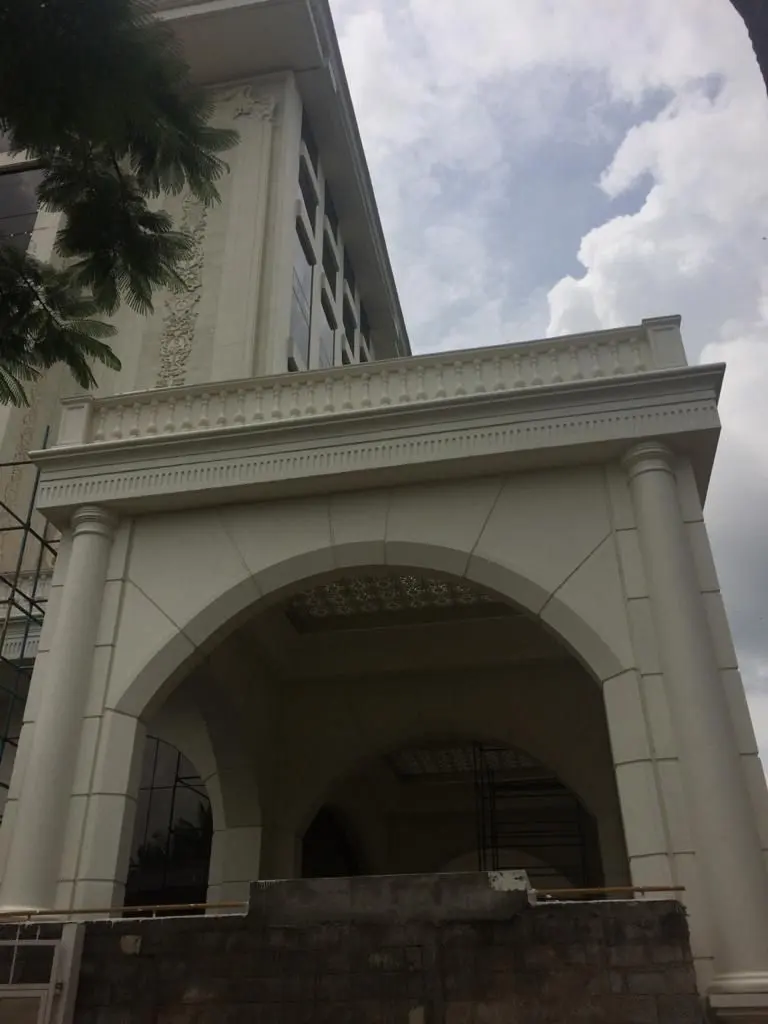
Courtyard by Marriott
A grand arched porch, columns, cornice, balustrade and jali screens for a hotel front.
- Arches
- Columns and capitals
- Cornices and brackets
- Balustrades and railings
- Jali screens
-
 2 photos
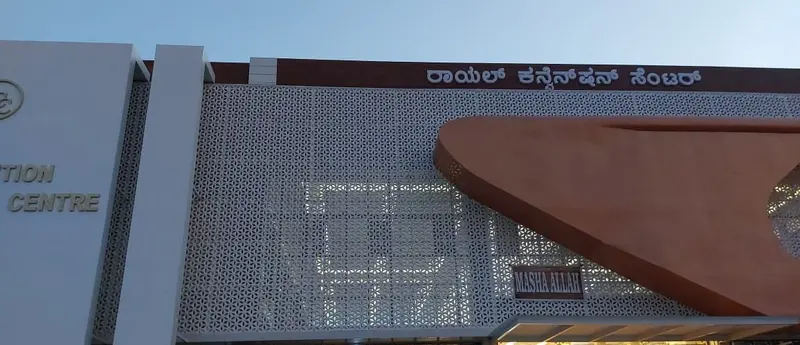
Royal Convention Centre
A star-pattern jali screen across the whole upper front of a convention centre.
- Jali screens
- Facade panels and cladding
-
 4 photos
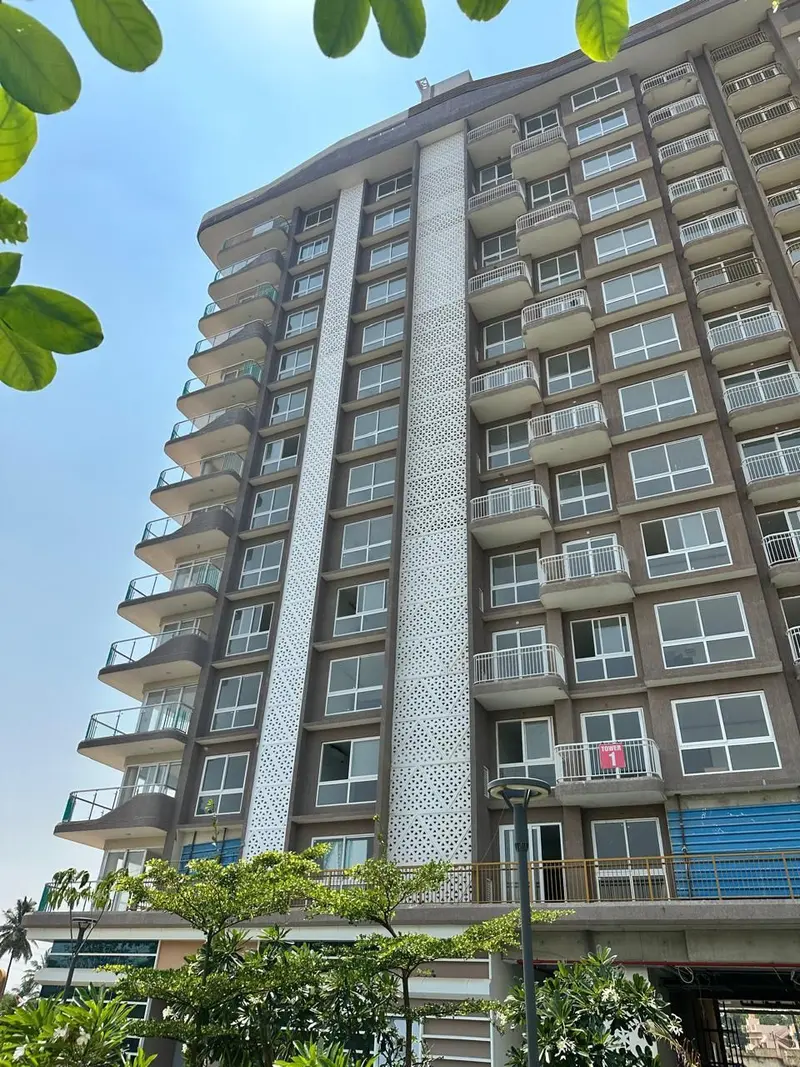
Aero One
White jali bands climbing the full height of a residential tower.
- Jali screens
Questions about GRC decorative screens
What's the difference between a jali and a decorative screen?
A jali is a pierced lattice, usually finer and more traditional. Decorative screens are a wider family, including contemporary panels and stackable blocks. We make both.
Can screens cover AC units and ducts?
Yes. Choose a pattern open enough for the units to breathe. Tell us the equipment behind the screen and we'll suggest the openness.
Can a screen be seen from both sides?
Yes. Double-sided screens are cast with the pattern finished on both faces, for partitions and lobbies.
How open should a car park screen be?
Open enough to ventilate the space. Tell us what the screen covers and we'll suggest a pattern with the right openness.
Get a quotation for decorative screens
Fill this in and it opens WhatsApp with your message ready to send. Attach drawings, photos or a sketch in the chat, and we'll reply with questions or a quotation that includes delivery to your site.
- +91 78921 42197
- WhatsApp +91 99005 79417
- grcbanglore@gmail.com
- Monday to Saturday, 9 am to 6 pm