GRC cornices and mouldings
Cornices, string courses and window bands give an elevation its lines. In Chennai they are often run by hand in cement on site, which depends on the mason, takes time on scaffolding and tends to crack.
GRC cornices at a glance
- Sizes
- Any profile, from slim window bands to deep roofline cornices, cast in lengths sized for handling.
- Weathering
- Drip grooves under projecting edges, sloped tops and sealed joints.
- Finishes
- Smooth or textured; natural, pigmented or painted.
- Fixing
- Anchored to the wall; corners cast as single pieces where possible.
- Priced by
- Running foot or metre, with corners and special pieces priced each.
- To quote, send us
- The profile (drawing or photo), total running length, number of corners, and the wall it fixes to.
GRC mouldings arrive cast and finished in standard lengths, every length matches the last, and the profile can include a proper drip groove underneath.
Cornices in Chennai and Tamil Nadu
- The northeast monsoon brings most of Chennai's rain between October and December, often driven against the walls. A cornice with a drip edge throws water off the face of the building instead of letting it run down and stain.
- Light enough to fix to an existing wall, GRC mouldings are a common way to update an older house without rebuilding the elevation.
Cornice and moulding styles we make
Four of the styles we cast most. Every one is made to your size, and the pattern or profile can be changed to your drawing.
-
Classical cornice
A crown moulding with dentils, for rooflines and string courses.
-
Window surround
An architrave frame with keystone, hood cornice and sill, around a window or door.
-
Sill with drip
A sloped sill with a drip groove underneath, so rain falls clear of the wall.
-
Parapet coping
A sloped cap for parapets and compound walls, with drips on both sides.
How cornices and mouldings are made and fixed
-
Profile drawing
We draw your profile full size, including drip grooves and sloped tops for the monsoon.
-
Profile mould
A run mould is made for each profile; returns and corners get their own moulds.
-
Casting lengths
Lengths, corners and end pieces are cast, cured and checked for straightness.
-
Fixing
Corners go up first, then lengths are anchored in line between them.
-
Joints
Joints are filled and sealed so water can't get behind, and the run is finished.
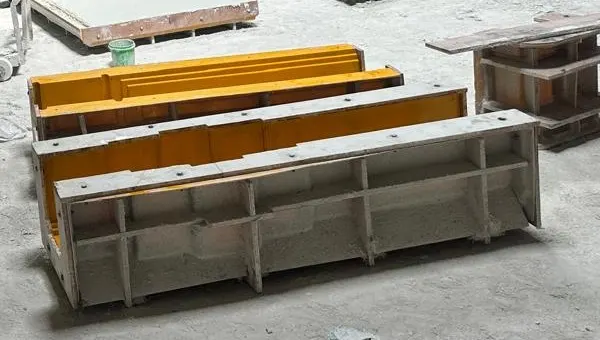
Projects with cornices and mouldings
Completed work by RJ Interiors & Constructions, the team behind GRC Chennai. 11 projects include cornices and mouldings.
-
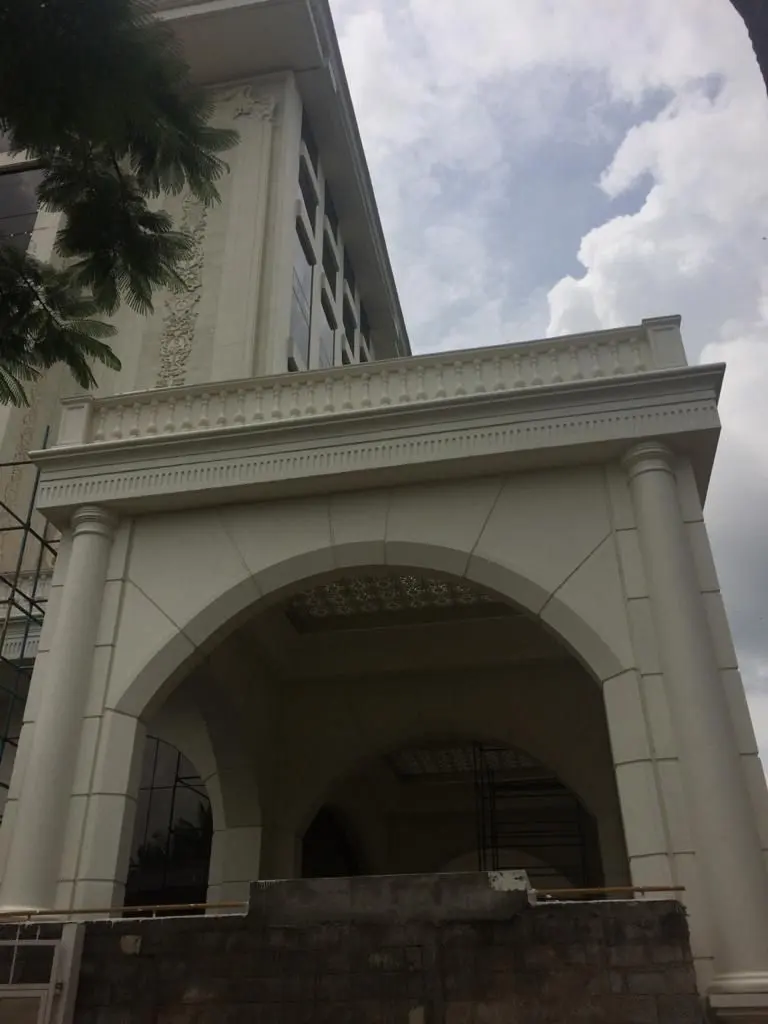 3 photos
Courtyard by Marriott
A grand arched porch, columns, cornice, balustrade and jali screens for a hotel front.
- Arches
- Columns and capitals
- Cornices and brackets
- Balustrades and railings
- Jali screens
-
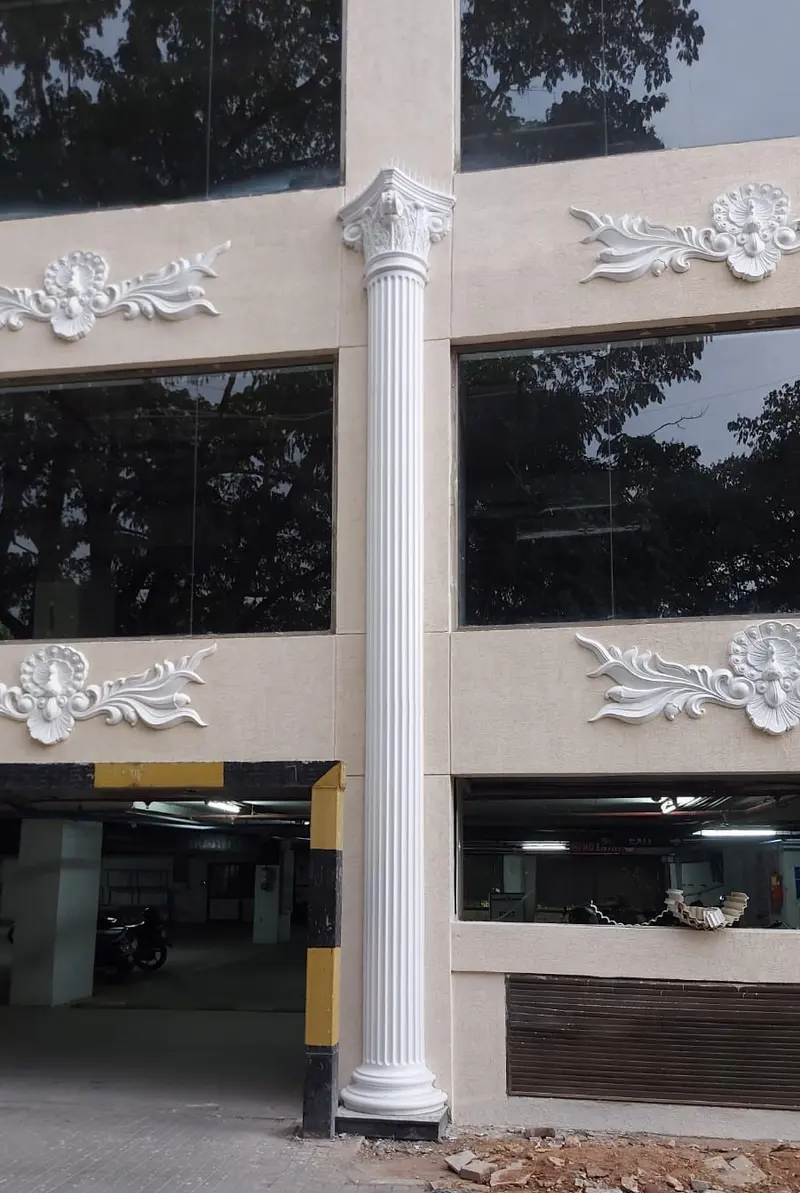 5 photos
1 MG-Lido Mall
Fluted Corinthian columns and carved scroll panels across a mall facade.
- Columns and capitals
- Carved ornament
- Cornices and brackets
-
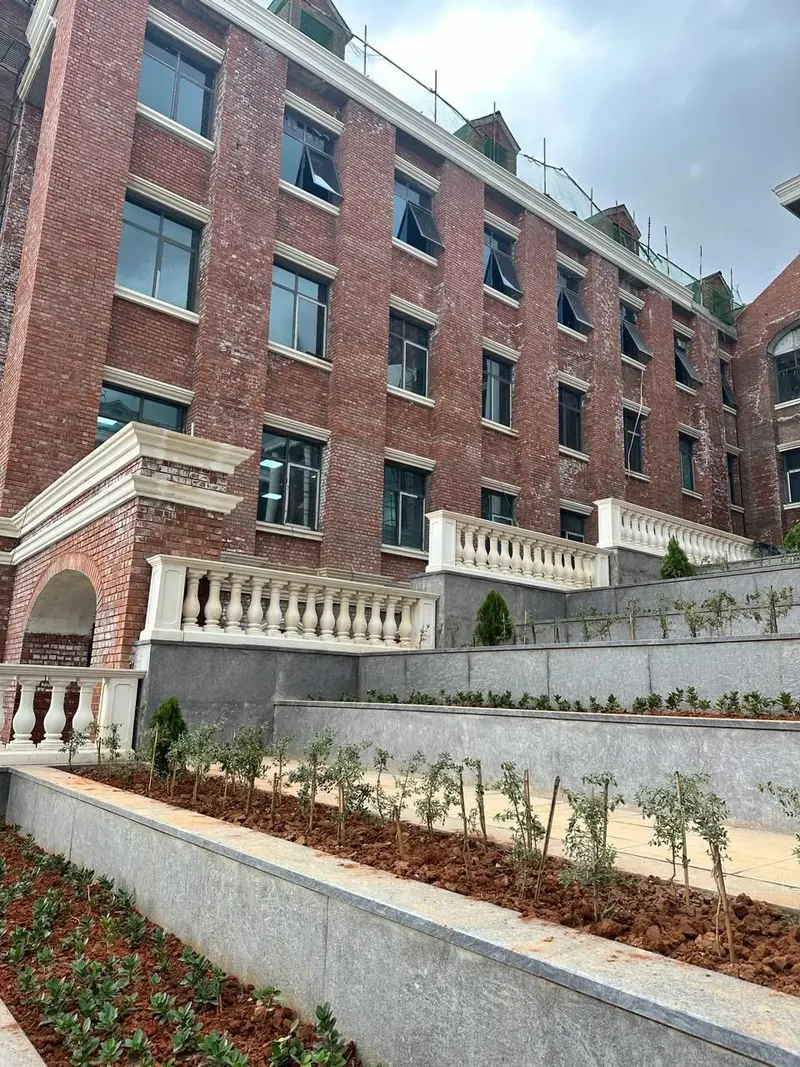 2 photos
Harrow International School
White balustrades, cornices and window surrounds for a red-brick school.
- Balustrades and railings
- Cornices and brackets
- Columns and capitals
Questions about GRC cornices
How are GRC cornices priced?
Usually per running foot or metre, depending on the profile size, detail and quantity. Corners and special pieces are priced each.
Can GRC cornices be added to an existing house?
Yes. They are light enough to fix to an existing wall with anchors. We check the wall and the fixing points before fixing.
Can you match a cornice on an old building?
Yes. Send a photo with a measured dimension, or a broken piece, and we draw the profile and make a mould.
Why does a cornice need a drip groove?
Without one, rain runs back under the moulding and down the wall, leaving streaks. The groove makes the water drop clear.
Get a quotation for cornices and mouldings
Fill this in and it opens WhatsApp with your message ready to send. Attach drawings, photos or a sketch in the chat, and we'll reply with questions or a quotation that includes delivery to your site.
- +91 78921 42197
- WhatsApp +91 99005 79417
- grcbanglore@gmail.com
- Monday to Saturday, 9 am to 6 pm